Being a kid back in the early 1990s or earlier were much easier times. If we were lucky, Major League Baseball games were picked up by one of the local network broadcasts. If not, we had to wait until the weekend for the Game of the Week. If our team wasn’t being shown on TV we had the “luxury” of catching it on the radio. Every morning we could read the box score in the newspaper an at the end of every season/beginning of the new season we could track every players’ stats in the yearly sports almanac or on the back of their baseball card if we were lucky to find that particular player mixed in the pack along with a piece of razor sharp bubble gum.
It may not seem like much because, well… it really wasn’t. Much like the TV cable/internet commercials with the older kids whining about how their young siblings “have it so good,” this unfortunately was just the way things were. When the World Series champions were crowned and the champagne dried on the walls of the clubhouse, it was time for the Baseball Writers Association of America to conduct their annual votes on season-based awards like the Rookie of the Year, Cy Young, Manager of the Year and Most Valuable Player for each league, and no matter how the votes shook out we all just had to sit their and take it.

As a kid you tend not to question these kinds of things for the simple reason that you just don’t understand how the process works.
If a player or manager end up winning one of the prestigious awards as voted by the BBWAA, you just assumed they got it right.
After all, the only knowledge you have of the candidates comes from whether or not your were a fan of that player, what you read about them in the newspaper or were fortunate enough to see a highlight or two throughout the year during the sports segment on the local news.
This of course is all pending on whether your family had enough money to afford cable. But as years moved on and technology evolved to the point where all of these questions we as fans have held onto for decades could finally be answered, the results we’ve discovered are at times more disappointing than we could have expected.
There is a major problem with the way voting is conducted for the regular season awards by the BBWAA, and even more so when to the Hall of Fame.
The first such incident that I became aware of occurred in 1999, but it focused primarily upon the Hall of Fame vote which took place in 1994. Of the 39 names which appeared on the ballot only one person was inducted into the Hall of Fame that year, Steve Carlton who received 95.6 percent of the vote on his first ballot.
The next closest was Orlando Cepeda who received 73.5 percent of the vote on his 15th and final ballot. Cepeda was later inducted based on the vote of the Veterans Committee.
Other notable names who would later be enshrined include Phil Niekro, Don Sutton, Tony Perez, Bruce Sutter and Ron Santo.
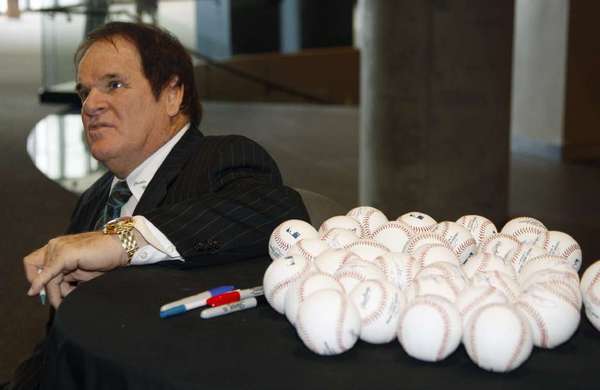 Notable names who fell short include Steve Garvey, Tony Oliva, Jim Kaat, Dick Allen, Minnie Minoso, Curt Flood, Pete Rose and the most infuriating name of all, Ted Simmons.
I fully understand why Rose wasn’t inducted, but I still find it funny that he was one the ballot; however, in the case of Simmons I have a personal issue with it.
Simmons was only on the ballot for one vote as he received only 3.7 percent of the vote, missing the possibility of another vote by 1.3 percent of the vote.
Some of you may know who Simmons is while other may not, what I can tell you is that his lack of presence in the Hall is a travesty for a bevy of reasons, all of which are a result of Simmons getting a raw deal by the BBWAA.
For starters, Simmons was a catcher who played for 21 seasons with the St. Louis Cardinals (1968-1980), Milwaukee Brewers (1981-1985) and the Atlanta Braves (1986-1988). Throughout his career he made eight All-Star appearances, won one Silver Slugger Award in 1980 and finished within the top-10 for the MVP three times, top-20 seven times. For his career he hit .285 and amassed 2,472 hits; need I remind you, he was a catcher.
Only seven catchers in MLB history have 2,000 or more hits; from top to bottom: Johnny Bench (2048) Hall of Famer, Gary Carter (2092) Hall of Famer, Mike Piazza (2127), Yogi Berra (2150) Hall of Famer, Carton Fisk (2356) Hall of Famer, Simmons (2472) and Ivan Rodriguez (2637). It’s fair to say that Piazza and Rodriguez will be Hall of Famers in the near future, but what the hell happened with Simmons?

The crazy thing from the hits perspective is that Simmons had the title for most hits as a catcher in MLB history for over 20 years and yet it was considered an afterthought, even though he has a better career average than a fair share of Hall of Famers including Bench (.267), Carter (.262) and Fisk (.269).
Simmons wasn’t a flashy guy, but he had decent enough defensive numbers which would have merited a Gold Glove or two had it not been for the fact that he played in the National League the same time as Bench.
But even with that, Fisk never won more than one Gold Glove throughout his career which happened to come in 1972, his rookie season with the Boston Red Sox in which he also won Rookie of the Year. But this is just one instance, let’s move on…
Tom Seaver and Nolan Ryan have the distinction of being the two players to come closest to being voted into the Hall of Fame via unanimous vote; both received a 98.8 vote in 1992 and 1997 respectively. Based on the numbers, Seaver was a clear choice.
His 311-205 record, 3,640 strikeouts, 1.12 WHIP, three Cy Young Awards, 1967 Rookie of the Year Award and 1969 World Series ring in 20 years spoke for themselves. Hell, he almost got a second ring in 1986 with the Red Sox in his final season. As for Ryan, things get a bit shaky. In 27 seasons Ryan amassed 5,714 strikeouts (most in MLB history), 2,795 walks (most in MLB history), a 324-295 record, seven no-hitters (most in MLB history) one World Series ring with the New York Mets in 1969 and 9.5 strikeout per nine innings ratio.
While these numbers are certainly impressive, two things that jump out at me are his lack of Cy Young Awards and his 52.6 win percentage. I bring all of this up because these two, once again, have the highest BBWAA vote in Hall of Fame history; however, it took a guy like Bert Blyleven 14 years to barely get inducted with a 79.7 percent vote despite the fact that he has more strikeouts than Seaver (3,701), a better win percentage than Ryan (287-250, 53.4 percent), one of the best curveballs in MLB history and as many World Series rings as the other two combined (1979 and 1987).
How can something like this happen? Numbers are black and white, but personalities are not. When it comes to the BBWAA and the votes, favoritism is the name of the game.

In 2012 when I was one of the lucky nine baseball fans selected to inhabit the MLB Fan Cave there was one day in particular that we were all privy too, the day Red Sox Hall of Famer Jim Rice paid us a visit.
After giving him a private tour I was lucky to spend a few minutes shooting pool, listening to him spin yarns about the old days. One of the topics that came up was his treatment by the media during his playing days, some of which was brought on by his stubbornness to talk before and after to games.
To him, the game was work. He didn’t go there to talk, he went there to perform. For 16 years Rice tallied 2,452 hits, a career .298 average, an AL MVP Award in 1978, eight All-Star appearances and two Silver Sluggers Awards. But, it still took him 15 years to get in.
The way Rice saw it, the Hall of Fame shouldn’t be a drawn out system. You either get in or you don’t. And if you don’t then it’s up to the Veterans Committee, who he felt should really be the party voting players in, not the BBWAA. This is an answer you would more often hear than not from those who played the game. After all, what does a guy watching the game know differently than those who played it? Perhaps this type of a system would have gotten long overdue players, in some peoples’ eyes, like Garvey, Dale Murphy, Jack Morris, Lee Smith and Don Mattingly in.
One other perspective where a player voting system would come in hand more than a writers’ perspective is when it comes to players on the ballot who played under the shadow of suspicion during the steroid era. While writers would like to cast their opinion in the form of a lack of vote for a particular player who was only suspected of taking and never proved to have taken, actual players tend to know the truth to a significant degree better than anyone as they know what actually goes on behind closed doors.
To paraphrase something I recall from Rice in New York, “nobody who didn’t put the in the work and opted for an easier path to a great career is certainly not getting my vote.”
Over the last week-and-a-half the BBWAA made their yearly selections for the regular season awards that are listed above, and in all but two cases the vote favored that of the social media/fan consensus.
 Those two awards which left people scratching their were the American League Manager of the Year Award which went to Cleveland Indians skipper Terry Francona and the AL MVP which went to Detroit Tigers third baseman and back-to-back winner Miguel Cabrera.
While it’s hard to debate that Francona shouldn’t have won, the mere fact that only three names appear on the ballot is a bit of sham.
Every manager should be allowed to be voted upon as there are certainly parameters that some see projected more than others.
One case in particular is in that of the job that Joe Girardi did with the New York Yankees who missed the postseason by a mere seven games despite the flurry of injuries the team sustained throughout the season.
The reason I bring this up is because Girardi is the guy who won the 2006 NL Manager of the Year Award with a Florida Marlins team who finished in fourth place in their division. As for Cabrera and the MVP, it’s a debate that can go either way. According to the BBWAA Web site, there is a system of rules that every voter must take into consideration when picking the MVP:
1. Actual value of a player to his team, that is, strength of offense and defense.
2. Number of games played.
3. General character, disposition, loyalty and effort.
4. Former winners are eligible.
5. Members of the committee may vote for more than one member of a team.
With rules like that, it makes it a bit hard to say that one person did worse than another. Instead of just saying that one person is worthy the BBWAA established a point system to tally the votes: For the MVP, a first-place vote is worth 14 points. From second to 10th, the ballot spots are worth 9-8-7-6-5-4-3-2-1 points, respectively. The unfortunate reality of this is that while the numbers may not lie, the voter can certainly have an agenda.
As was the case with Bill Ballou, a writer for the Worcester Telegram & Gazette, who gave Los Angeles Angels centerfielder Mike Trout a seventh place vote. Even though Trout finished in second place for the second year in a row, his statistics and the way that other voters cast their ballots would seriously contradict this sort of a move from Ballou, which ultimately caused a rift through the media. Biased voting practices such as this are not uncommon.

Back in 1957, Yankees Hall of Famer Mickey Mantle edged Red Sox Hall of Famer Ted Williams for the AL MVP Award despite the fact that Williams led the league with a .388 batting average, hit four more home runs and knocked in seven less runs in 12 less games.
As it turned out, two writers in the Chicago branch had given Williams ninth and 10th place votes on their ballots.
Like any voting system, there really isn’t a perfect system. Is the BBWAA doing things right? At times they do and other times they don’t. Last year’s Hall of Fame vote is a for sure time when things did not go right. Personal biases were thrown into the public realm as five members of the BBWAA decided to submit blank ballots to “voice” their stance on how ardently opposed they are of anyone from the steroid era getting into the Hall.
While I fully understand why the BBWAA was put in place, there are times where it makes absolutely no sense to allow them to have a vote on anything. This was one of those times. While I support the right to one’s freedom of the vote, at the end of the day every member of the BBWAA needs to come to the realization that their power is useless beyond the walls of the game. Their vote will not appoint anyone to public office. Their vote will note be a cure for a terminal disease. All their ballot sheets are good for is a determination of whether or not someone could play a game better than others.
Cleaning up the game, ridding it of the exterior sins of real life would be great, but one cannot be judge, jury and executioner for scores of players who are only guilty of playing alongside a small group of other players who were caught violating the rules. Nowhere in the five rules above does it say that speculation should be taken into consideration when filling out a ballot sheet, but judgment of character certainly is. But I must ask, how can one judge another persons’ character if they’ve never been guilty of anything?
Another feasible option would be giving the power to only the players and managers, but this could develop into a problem due to the risk of rivalries that burn for years beyond what takes place on the field. In a perfect world having an impartial jury put together to makes these votes might seem like a good idea, but the problem with that goes back to the way things used to be, where all you had to gauge a player was based on what was written in a book or printed on the back of a baseball card. As lame as it may seem, the system already put in place with the BBWAA is the way to go. All we can do as fans, and in some cases players, is hope and pray that they get it right. For those players who are reading this, now might be a great time to start giving more exclusive interviews.